Somatic Symptom Disorder Treatment in Stuart FL | Understanding the Mind–Body Connection
Many people experience real physical symptoms—pain, fatigue, nausea, headaches—yet medical tests come back normal. When physical distress is connected to emotional stress, the condition may be related to Somatic Symptom Disorder (SSD).
At Treasure Coast Psychiatry in Stuart, FL, we help patients understand the mind–body relationship and provide evidence-based treatment that reduces symptoms and restores quality of life.
Somatic Symptom Disorder is often misunderstood, leaving patients feeling dismissed, confused, or overwhelmed. But the symptoms are real, not imagined—and with proper psychiatric care, patients can achieve long-term relief. Our psychiatrist, Dr. Velazquez, offers comprehensive evaluations, therapy, and biologically informed treatment plans tailored to each individual. Learn more about our approach on our Services page.
What Is Somatic Symptom Disorder?
Somatic Symptom Disorder occurs when a person experiences physical symptoms that are distressing or disruptive but cannot be fully explained by a medical condition. Emotional stress, trauma, depression, or anxiety can influence how the body responds, causing physical sensations that can feel severe. According to the American Psychiatric Association, SSD is diagnosed when physical symptoms cause excessive worry, fear, or difficulty functioning.
The World Health Organization explains that the mind affects many core body systems, including the digestive system, immune response, muscles, and cardiovascular function. Read more at the WHO Mental Health portal.
Common Physical Symptoms Associated with SSD
Chronic pain (back, stomach, muscle, or joint pain)
Fatigue or low energy
Gastrointestinal discomfort
Shortness of breath
Numbness or tingling
Chest tightness or palpitations
Headaches or migraines
Dizziness or faintness
Why Do These Symptoms Occur?
Emotional and psychological stress activates the autonomic nervous system and releases stress hormones like cortisol and adrenaline. Chronic activation of these systems can cause the body to misinterpret normal sensations or amplify discomfort. Harvard Health explains how these biological mechanisms affect the gut, muscles, and pain pathways (Harvard Health).
Other possible contributors include:
Trauma or adverse childhood experiences (NIMH Research)
Genetics and family history
Anxiety disorders or depression
High sensitivity to bodily sensations
Chronic stress or prolonged pressure
How Somatic Symptom Disorder Affects Daily Life
Physical symptoms may lead to:
Missing work or school
Frequent medical appointments
Fear of having a serious illness
Relationship strain
Financial stress from repeated testing
Social withdrawal
Many patients fear they are “not being taken seriously.” At Treasure Coast Psychiatry, we validate your experience and offer clarity, structure, and a medically informed path to recovery.
Psychiatric evaluation and patient discussion about Somatic Symptom Disorder at Treasure Coast Psychiatry.”
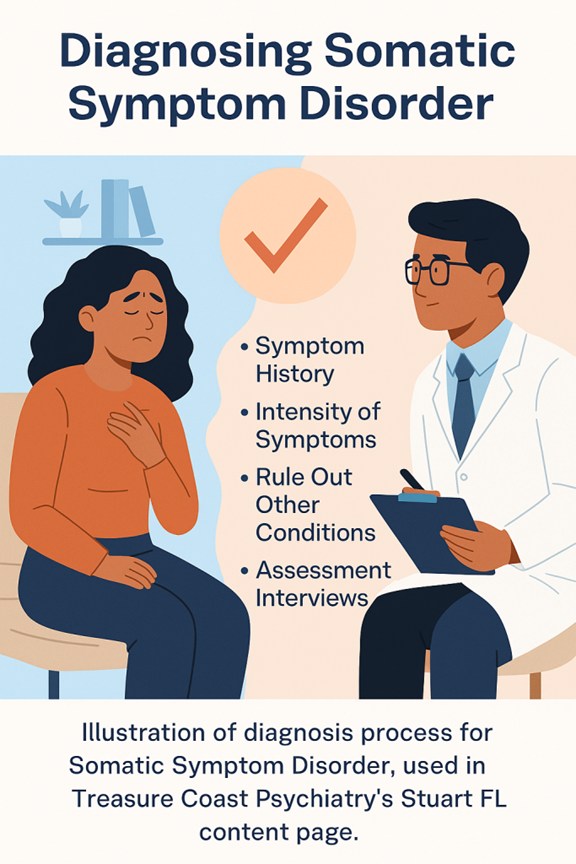
How We Diagnose Somatic Symptom Disorder in Stuart, FL
Diagnosis begins with a comprehensive psychiatric and medical review. According to the Mayo Clinic, key diagnostic criteria include:
One or more physical symptoms that are distressing
Excessive thoughts, fear, or behaviors related to those symptoms
Symptoms lasting longer than six months
Our evaluation includes:
Full psychiatric assessment
Review of medical records and lab results
Screening for anxiety, depression, PTSD, or trauma
Evaluation of stress levels, coping skills, and daily routines
When necessary, we coordinate with medical providers and specialists to ensure safe and thorough treatment—learn more on our Payments page regarding covered services.
Psychiatrist discussing evidence-based treatment options for Somatic Symptom Disorder at Treasure Coast Psychiatry.
Evidence-Based Treatment for Somatic Symptom Disorder
Treatment focuses on reducing symptoms, improving daily function, and addressing emotional stressors that may influence the body.
1. Cognitive Behavioral Therapy (CBT)
CBT is one of the most effective treatments for SSD. It helps patients understand how thoughts and emotions influence physical sensations. Research summarized by Psychology Today shows CBT significantly improves symptom control.
2. Mind-Body Therapy
Techniques include grounding exercises, diaphragmatic breathing, mindfulness, and relaxation strategies. The Sleep Foundation highlights how mind–body methods help regulate pain and tension.
3. Medication Support
Although medication is not always required, certain antidepressants or anxiety medications can reduce physical symptoms caused by stress.
4. Treatment for Co-Occurring Conditions
Many patients with SSD also experience anxiety, PTSD, or depression. Our integrated treatment model ensures these conditions are addressed together for better outcomes.
5. NeuroStar TMS Therapy (when indicated)
While TMS is primarily used for depression, improving mood and anxiety often reduces physical distress. Learn more about this advanced, non-invasive option on our NeuroStar TMS page or the official NeuroStar website.
6. Lifestyle and Behavioral Changes
The CDC Mental Health division recommends routines that support both physical and emotional balance:
Regular sleep schedule
Gentle exercise
Stress reduction practices
Balanced diet
Reducing stimulants
Consistency makes a tremendous difference in reducing physical discomfort related to emotional stress.
How Long Does Recovery Take?
With structured therapy, many patients experience improvement within 8–12 weeks. Long-standing symptoms may require longer treatment, but recovery is very achievable with continued support.
When to Seek Psychiatric Help
Schedule an evaluation if physical symptoms:
Persist despite normal medical tests
Interfere with work or relationships
Cause significant fear or distress
Are accompanied by anxiety, depression, or trauma
Take the First Step Toward Relief
You do not have to navigate unexplained physical symptoms alone. Contact Treasure Coast Psychiatry for compassionate, science-based care.
Frequently Asked Questions
1. Are somatic symptoms real?
Yes. Somatic symptoms are real physical sensations influenced by emotional and biological stress responses.
2. How is Somatic Symptom Disorder diagnosed?
Diagnosis is made through a psychiatric evaluation that assesses symptoms, medical history, emotional stressors, and cognitive patterns.
3. Can SSD go away without treatment?
Symptoms may persist or worsen without treatment. Therapy significantly improves long-term outcomes.
4. Is SSD caused by stress?
Stress often plays a major role, but genetics, trauma, and anxiety also contribute.
5. What is the best treatment for SSD?
CBT, mind–body therapy, and treatment of co-occurring conditions are the most effective approaches.
6. Can SSD cause pain?
Yes. Many patients experience real pain even when medical tests show no structural cause.
7. How long does CBT take to work?
Many patients see improvement within 8–12 weeks of consistent therapy.
8. Can SSD affect digestion?
Yes. Stress and anxiety commonly impact the digestive system, causing discomfort.
9. Does TMS help SSD?
TMS may indirectly help by reducing depression and anxiety symptoms associated with SSD.
10. Should I see a psychiatrist or a primary care doctor first?
If symptoms persist despite normal medical tests, a psychiatric evaluation is the appropriate next step.
Start Your Path to Mental Wellness
Call (772) 210-5450
2030 SE Ocean Blvd, Stuart, FL 34996


Comments